
Why a foam surfboard needs its own care
Soft top surfboards are built differently from fiberglass and epoxy boards. Instead of a hard resin shell, the construction is a foam core with stringers, a soft foam deck and a slick plastic bottom. That makes a foamie forgiving and durable — perfect for a beginner learning to catch waves — but it also means the board reacts to heat and pressure in ways a hard shortboard doesn't. Treat the foam well and the shape, stability and performance stay the same season after season.
The good news: caring for a softboard is simpler than caring for a fiberglass board. There is no wax to strip from the deck, no resin to crack and rarely any need for a repair kit. A few habits are enough.
After every session
- Rinse the board with fresh water to remove salt and sand.
- Rinse the leash and let it dry uncoiled.
- Check the fins and screws are still tight.
- Stand the board in the shade to dry before you put it away.
Keep it cool
Heat is the biggest threat to any foam board. The inside of a parked car can get hot enough to make the deck bubble or delaminate. Don't leave your board in a closed car, and don't leave it lying deck-up in strong sun between sessions. A knit board sock reflects sun and keeps the graphics from fading.
Store it properly
Store the board flat on a rack, or on its rail in a cool garage. Don't lean heavy things on it, and don't hang it by the leash plug. If it lives outside, a cover or sock is a must.
Travel with care
- Take the fins out for the drive so they don't push into the foam.
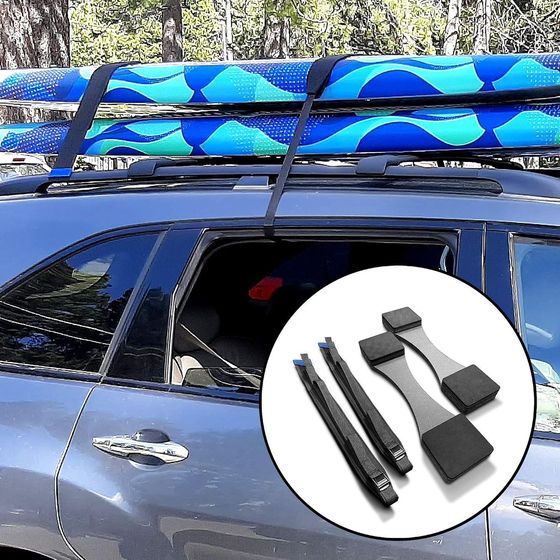
- Use a soft rack such as StormRax, deck down, with straps over pads.
- Don't over-tighten straps — foam dents if you crank it.
- Slip on a board sock to keep grit off the slick bottom.
Fins, screws and small parts
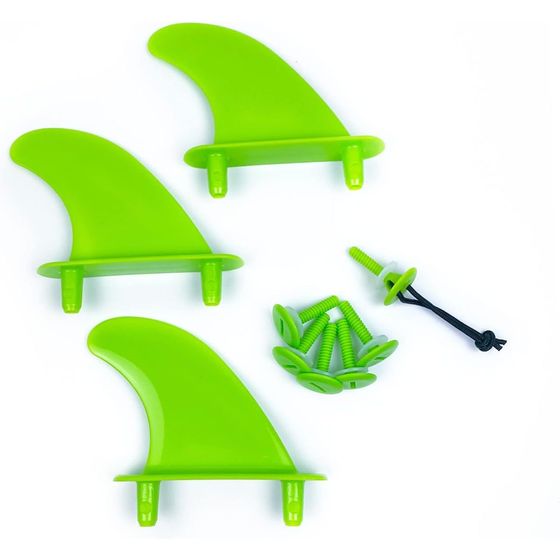
Bolt-thru fins on our Classics are held by screws. Keep a spare fin set and screws in the car; they're the parts most likely to go missing on the beach. SUP owners should keep a spare 9" fin plate and screw.
Dings and repairs
Small dents in a soft deck are cosmetic and don't need fixing. If the slick bottom gets a deep gouge or the skin starts to lift, keep the board dry and out of heat, and contact the store you bought it from about your options.
Bodyboards, longboards and paddleboards
The same rules apply across the quiver. Bodyboards dislike heat even more than surfboards because they are thinner, so never leave one on hot sand deck-down for hours. A longboard or SUP should be carried by the rail, not dragged by the tail, and stored on a rack where its long shape is supported along its length.
When to replace parts
Leashes wear out before boards do. Replace a leash when the cord is nicked or the swivel is stiff — it's the one piece of gear that keeps the board under control and away from other surfers. Replacement fins are inexpensive, and a spare fin pack in the car saves a surf day. A traction pad that has started to lift can be pressed back down when the board is dry; if it peels away, a new pad is an easy fix.
Hard-board owners: removing old wax
If you also ride a waxed hard board, let it sit in the sun for a minute to soften the wax, then use a wax scraper to lift it in strips before applying fresh wax.
Boards to look at next
 Wavestorm
StormRax Surfboard & SUP Roof Rack
 Wavestorm
 4.5in Bolt-Thru Fin Set